
This post contains affiliate links. If you book something through these links I get a small commission at no extra cost to you. You can read more about my disclosure and affiliate policy here.
…

I was very much looking forward to the best Brazilian dishes when I ventured to South America for the first time. Meat galore, avocados, the mysterious açai, caipirinhas, and even the every day special, rice and beans, seemed so enticing.
In addition, I was dying to go to Brazilian supermarkets and markets. In case you didn’t know, I am obsessed with foreign supermarkets and find few things more interesting when I discover a new destination.
Unfortunately, I didn’t get lucky when it came to Brazilian food. While the mangos were a highlight in the supermarkets as and the coconut water was inexpensive enough to drink a liter each day, the rest of the dishes left me wanting. Everything in Arraial do Cabo where I was staying seemed too doughy, too deep-fried, and too cheesy (never thought I would ever complain about too much cheese so this was a surprise).
Rio de Janeiro was different and I had two wonderful meals full of flavor and local ingredients at Zaza Bistro and Zuka. But needless to say, those fine dining restaurants in Rio were a special treat and was still looking for everyday Brazilian meals, inexpensive snack, and dishes Brazilians miss when they leave home. Honestly, on this trip, I never found those. As usual, hindsight is a great guide and so I have asked around among travel bloggers for you – What are the best Brazilian dishes you shouldn’t miss?
Staying Connected with Holafly eSIMs in Brazil
Skip expensive roaming fees and get online the moment you land with Holafly’s unlimited data plans. The Always On benefit includes a 1GB/month global backup data boost (as long as your eSIM is installed), so you’re never stuck without service.
Goes without saying that I am already planning another trip now that I have this list…
Travel bloggers’ favorite Brazilian dishes


Tapioca
When travelling in the northeast of Brazil, you will certainly hear about tapioca. In some places, like the beautiful colonial cities of Olinda or in Salvador, squares are full of people at sunset eating in one of the tapioqueria stalls in the squares.
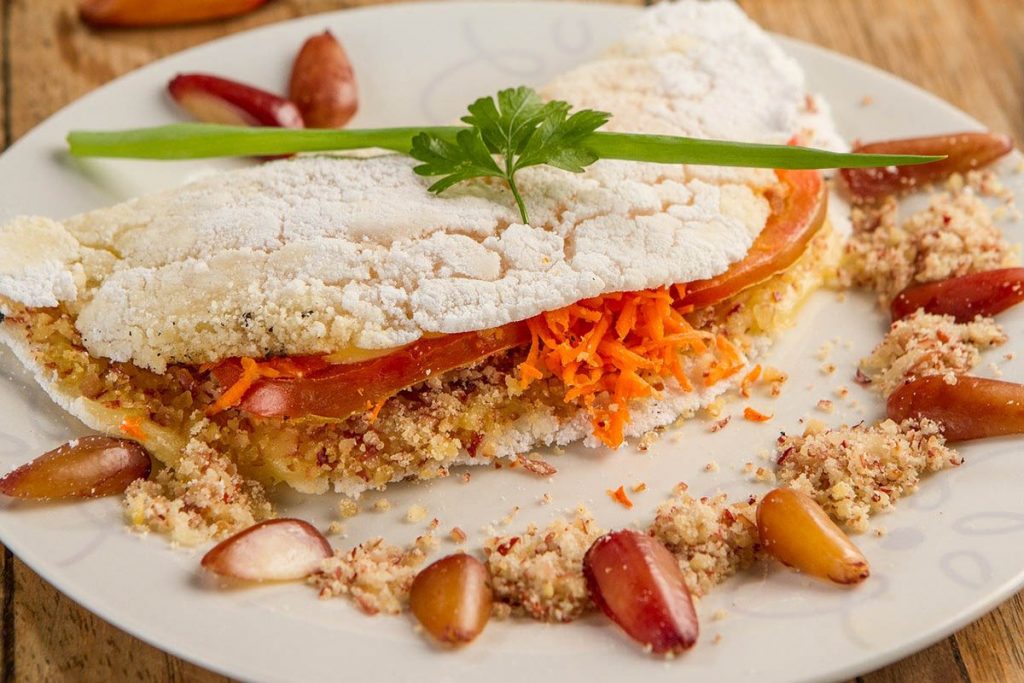
But what is tapioca? It is a flatbread looking like a tortilla, made of cassava flour. It is so popular, that Brazilians in the whole country eat it any time of the day.
It can be both savory and sweet and the topping options are sheer endless. The Brazilian favorite is tapioca topped with cheese to which you can add some meat or vegetables.
Sweet tapiocas can be eaten as a Brazilian breakfast, but also as a dessert. Brazil produces a huge variety of jams thanks to the many fruits growing there, which are a good option as a sweet tapioca topping. My all-time favorite? As an Italian, I love one with Nutella for breakfast before a whole day on the outstanding beaches of Pipa.
by Rest & Recuperation
Brigadeiro
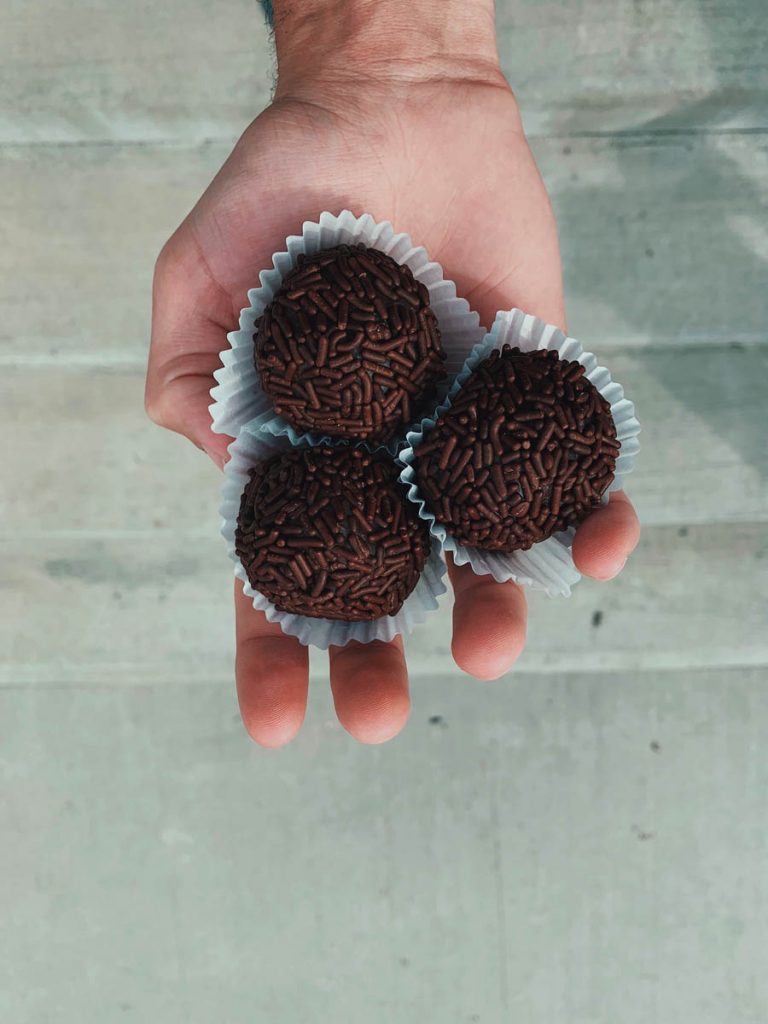
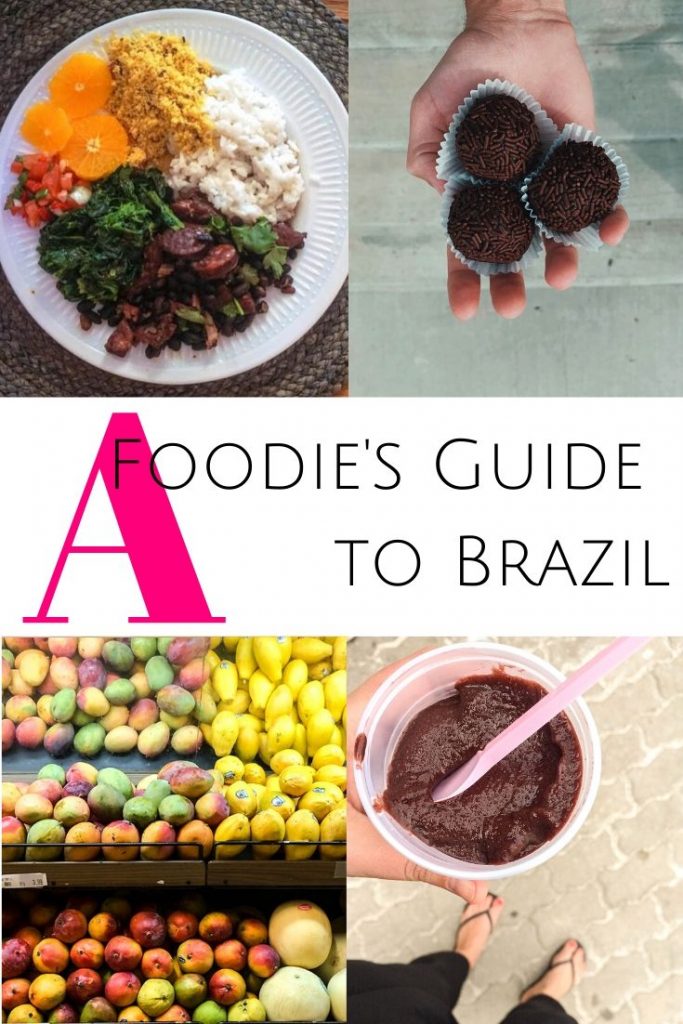
Brigadeiro is a favorite party treat in Brazil. In fact, brigadeiros are just as important – if not more – as the cake at Brazilian birthday parties. Luckily, if you are traveling in Brazil, you don’t need to be invited to a party to taste one. Nowadays, you can find these little chocolate fudge balls everywhere, from street food stalls to ‘padarias’ (Brazilian bakeries) and restaurants.
The traditional chocolate version, there are plenty of variations, is a 3-ingredient foolproof recipe which includes condensed milk, cocoa powder, and butter plus chocolate sprinkles to decorate. For Brazilian parents, it is an easy way to spoil their guests but also a simple recipe to teach kids to make by themselves with a bit of supervision during cooking time.
Brazilian Beans
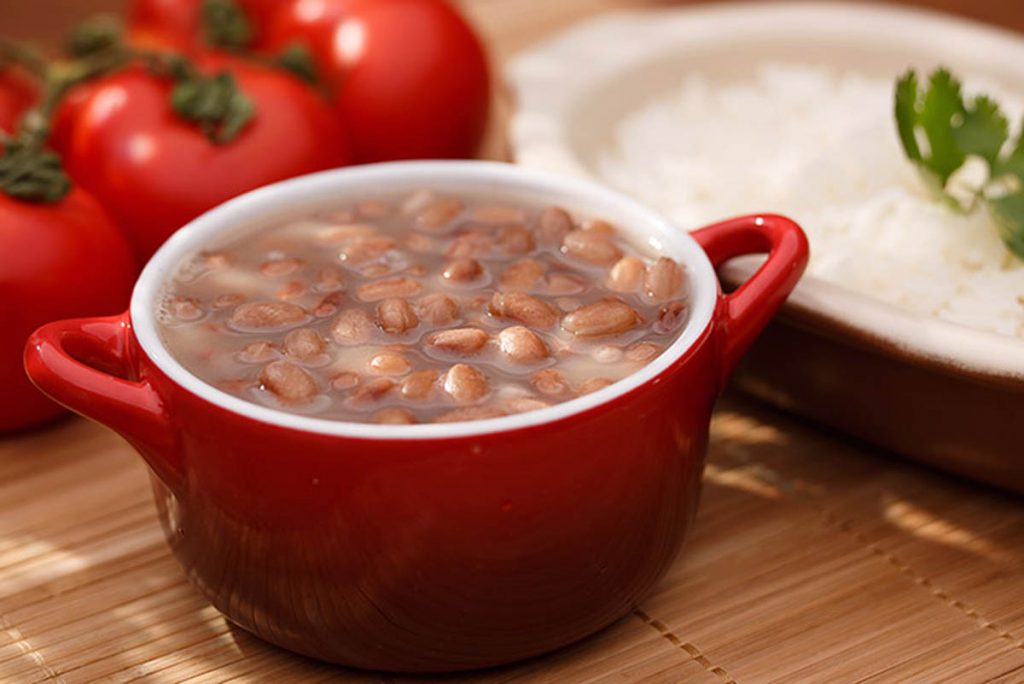
Beans are one of the most popular side dishes in Brazil, and to be honest, roughly 90% of Brazilians eat some type of bean every day. We simply can’t avoid it!
Often served with garlic rice, pinto beans are nicely tender and flavorsome. They are cooked in a pressure pan or instant pot. Later in the cooking process, we add bacon, onions, garlic, parsley, bay leaves, and salt and pepper to taste. The result is tender beans with a delicious creamy broth. Brazilian beans are quite filling, and they taste even better when well prepared! Are you going to resist?
by I Heart Brazil
Bolinho de Bacalhau
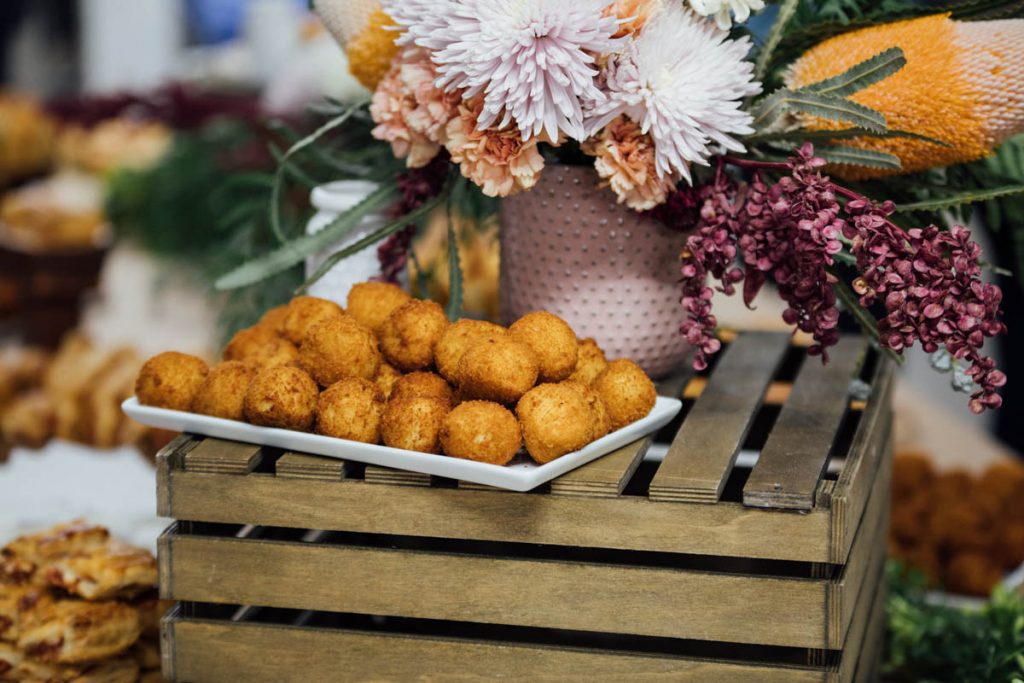
Deeply rooted in Brazilian culture, Bolinho de Bacalhau or codfish dumpling is a traditional Portuguese recipe. Typically made from a mixture of codfish, eggs, parsley, onion, potatoes, and a hint of nutmeg, they are eaten in Portugal and Brazil. Although they are believed to be of Portuguese origin, they were so enthusiastically adopted in Brazil that they became part of the Brazilian cuisine.
Today, you can find them everywhere in Brazil and every Brazilian cookbook. You can serve them as a snack or starter to friends at home, or as a dish to go with rice and vegetables. You can find them at corner stalls, bars, and restaurants, and similar to Spanish tapas, they are also eaten as bar food with chilled beer. A good Bolinho de Bacalhau is a little crunchy on the outside, and soft and creamy on the inside.
Pastel
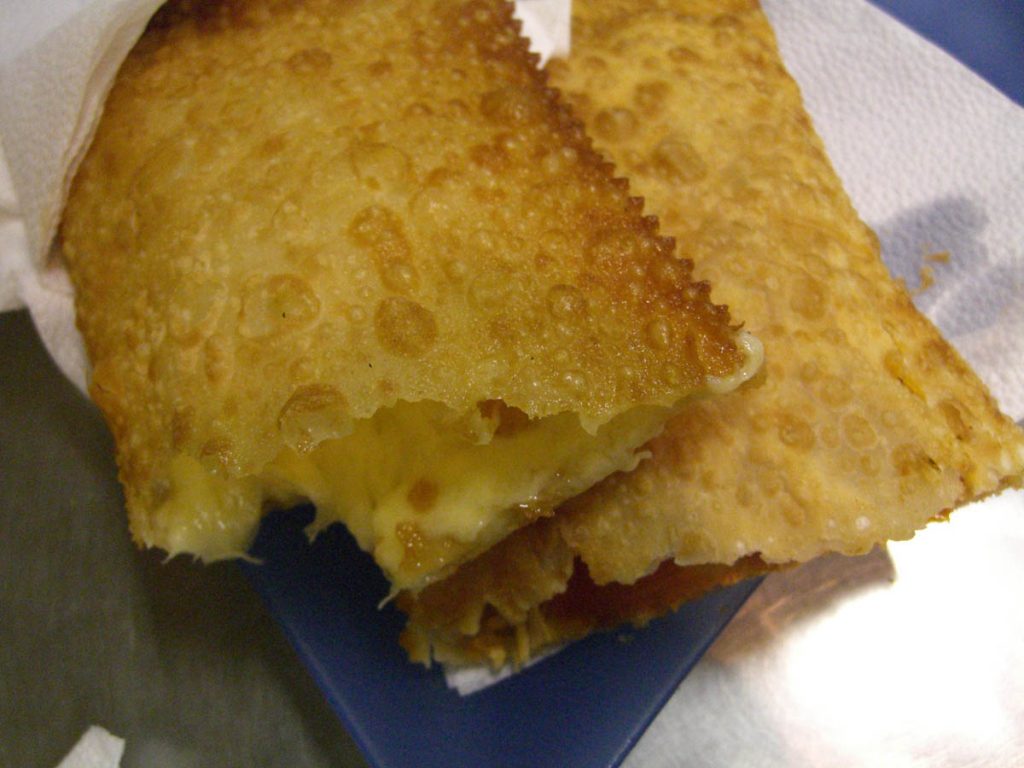
Pastel is the Brazilain food I crave the most. Mainly because, while leaving and traveling abroad, I didn’t find anything similar to it, and it’s not the type of food you would prepare at home for lunch or dinner. It’s street food, a delicious deep-fried snack you crave when you are out and about in the city, or after a few hours on the beach, or when you go shopping at a weekend street market.
No doubt it’s one of the most loved street foods in Brazil, and despite the cultural and gastronomic differences we have within the country, you will find pastel everywhere. Are you ready to start drooling? Think of a very thin and light dough, filled with goodness like cheese, cheese & ham, or minced meat and olives, or shrimps in tomato sauce, or palm heart in tomato sauce.
For dessert, the best one is filled with banana and coated with sugar and cinnamon. These are the traditional flavors, but as Brazilians, we can be very creative, so don’t be surprised when you find pastel filled with BBQ pork, spinach & bacon, or white chocolate.
After the dough is filled, it’s deep-fried and served super hot. Be careful to not burn your fingers! A regular pastel is the size of a hand or a bit bigger; it can be squared, rectangular, or in the shape of a half-moon. It goes very well with sugar cane juice, cold beer, and coconut water, making it the perfect snack for summer days. Oh, I miss it now…
Carolinas

Carolinas are a local specialty from the state of São Paulo where they are very popular. They’re kind of like a French éclair, except that they are small and round and don’t have the elongated shape of an éclair. (Sometimes they do come in an elongated shape but in this case, they go by a different name: bomba)
Also, the filling inside is not cream, but rather doce de leite, which is the Portuguese name for dulce de leche. Carolinas are sold in bakeries and pastry shops all over São Paulo, and sometimes you can also find them on the dessert menu at restaurants. Vaca Ateliê Culinário is a popular vegan restaurant in São Paulo that offers a fully plant-based version of Carolinas as part of their Sunday brunch.
by The Nomadic Vegan
Açai


The açai (pronounce assai) is one of the favorite Brazilian dishes. It’s made of the fruits of a specific palm tree, commonly seen in the north of the country. Curiously, this dish is eaten differently according to where you are in Brazil.
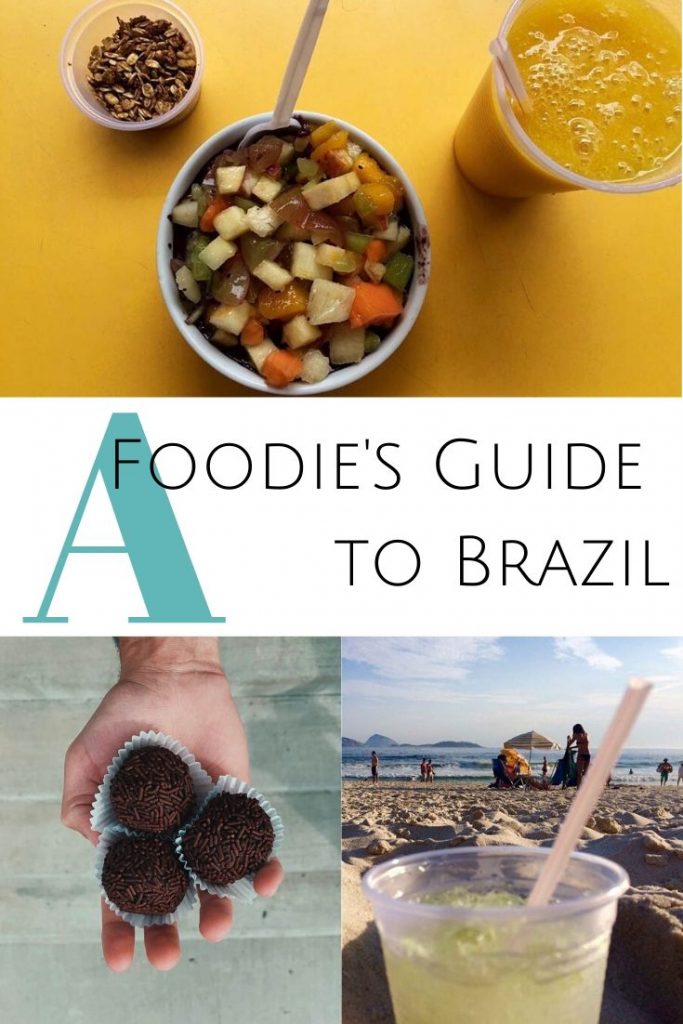
For instance, in the state of Pará, where açai is particularly famous, people eat the fruit smashed only and as a side dish, either for breakfast, lunch or dinner, with rice, beans, or on its own. Further south in the country, in places like Rio, the dish takes another look. Here it is mostly eaten after sports or a promenade walk, it has sugar and a choice of different fruits to accompany it; and you never eat it as a side dish. Nevertheless, one thing is undeniable: açai has many health benefits and is incredibly tasty.
Pao de Queijo

Pao de Queijo (pronounced pow-du-KEHjo, sort of) was the first food I tried in Brazil. Then I fell in love with it and ate it almost every day!
It is actually a mix of cheese and bread baked together, as its Portuguese name implies. Sold in small pieces, Pao de Queijo is a popular snack and breakfast food in Brazil.
You can find it basically at any restaurant in the country or buy it from many street food vendors. The price is usually below US$ 1 per piece. If you want to buy several pieces, it is better to get it from the supermarket as it will be much cheaper.
Feijoada
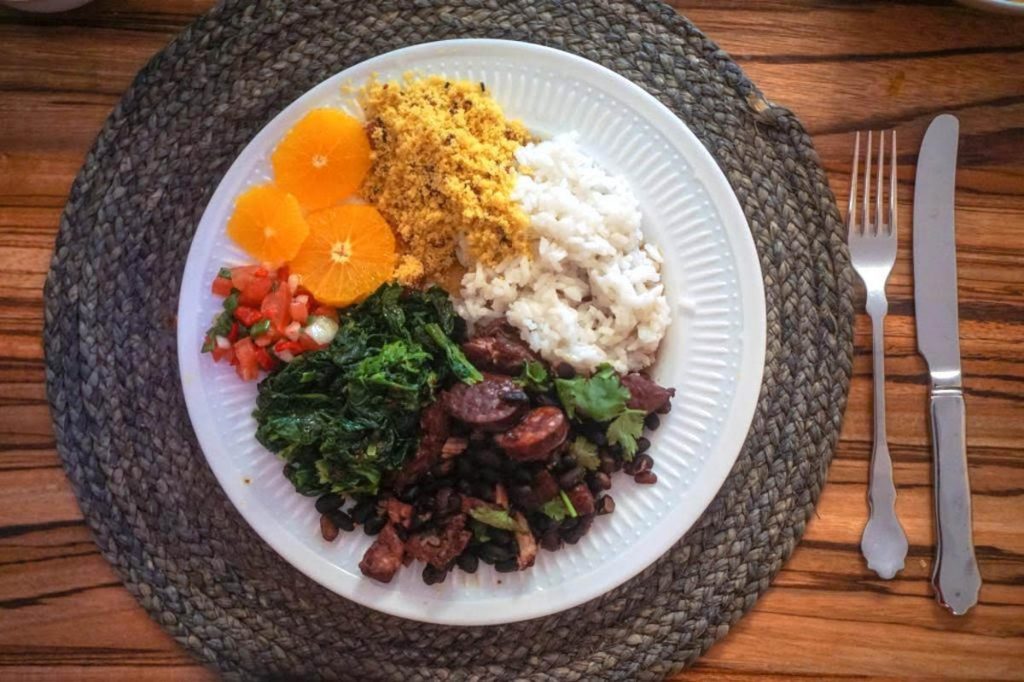
No dish is more essential to the Brazilian table than feijoada. Simply put, feijoada is a stew made of black beans and plenty of meat — typically including at least a few of the following: carne seca (dried shredded beef), linguica (a Brazilian sausage), patas (pig feet), and plenty of other kinds of meat. But truly, any kind of meat goes, and you’ll often find that each household has its own version of feijoada.
Feijoada is typically served as a “feijoada completa” which means “complete feijoada”; in other words, with all the accompaniments that make this humble meat and bean stew shine!
A feijoada completa consists of feijoada, rice, greens (couve in Portuguese, a kind of cabbage similar to kale or collard greens), orange slices, and farofa. Farofa may be the most important part of the feijoada completa: it’s a traditional Brazilian garnish made of toasted cassava flour flavored with onion, garlic, and bacon. Together, you may enjoy it with a bit of vinagrete (a fresh salad of tomato and onion) or some hot sauce, mixing each bite with the different components of the feijoada for different tastes in each bite! If you want to make feijoada completa at home, check out my simplified recipe for feijoada made in the instant pot!
by The Passport Kitchen
Coxinha
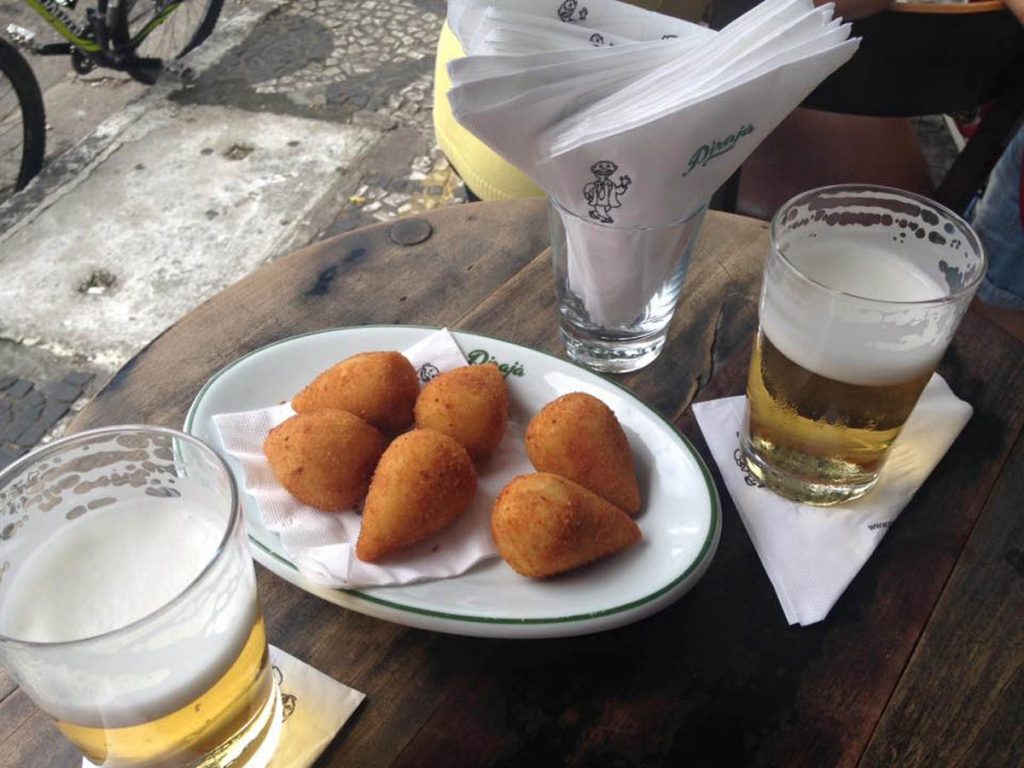
Brazilian food is known worldwide for its famous “feijoada”. A dish made of steamed beans, heavy in jerk beef, and pork meat cuts. But the Coxinha, this local “drumsticks” snack has the award as the real national passion.
With so much love involved, the coxinha became one of the hallmarks of the rich Brazilian cuisine. It even has its own date to be celebrated on May 18.
Among cheese bread, feijoadas, pastries, and caipirinhas, the coxinha is also a mandatory stop for any foodie in Brazil. Coxinha is a deep-fried snack or can be eaten as finger food with a cold beer or caipirinhas.
The filling is a mix of shredded chicken, onion, garlic, tomato, and the Brazilian cream cheese Catupiry. Chicken broth whisked into the flour is the basis for the dough. The dough is filled with the chicken and cheese, shaped into a rough cone shape, or “drumstick” to imitate a chicken leg. Then it becomes a “coxinha”, or small chicken leg.
I love coxinha. Every time I’m in Brazil, I run to a Brazilian snack bar to feed my taste buds! Meeting my friends to catch up around a plate of coxinha and cold beers make the perfect Brazilian easy-going style happy hour.
Acarajé

I was excited to learn about Acarajé, a delicacy from Bahia and a favorite Brazilians street food snack. It originated during the colonial times in Brazil and was introduced by Nigerian slaves.
It is basically a fritter made out of dough from black-eyed peas, ground dried shrimp, and onion. These fritters are deep-fried in dendê, palm oil, and cut in half.
Each of these fluffy yet crunchy dough balls is filled with different sauces, vegetables, or sometimes boiled, unpeeled shrimps or shrimp paste.
Caipirinha
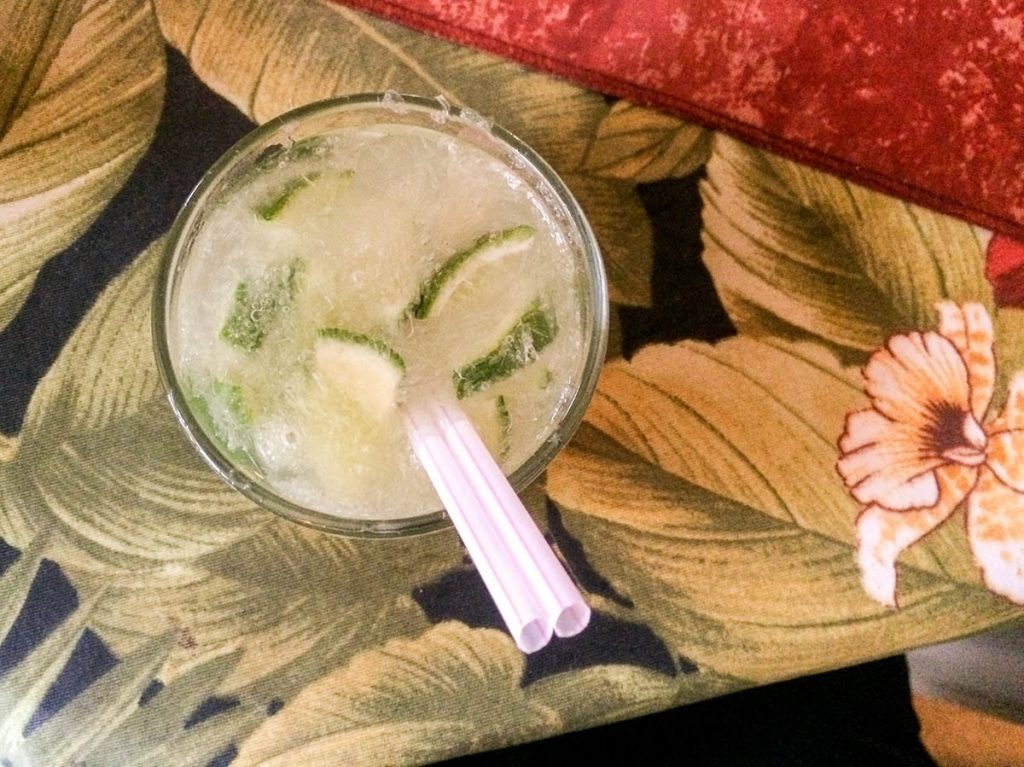
While technically not a Brazilian dish, you cannot come to Brazil without having a Caipirinha. Horrible legend has it that it was once invented for the slaves as they would suffer from only drinking cachaça. By adding limes and sugar, it would basically become a somewhat nutritious meal. I am not sure if the legend is true or not and needless to say, you cannot live off Caipirinha alone but they do make for an incredibly potent cocktail hour companion.
Pin for Later!


5 comments
What a wonderful and mouth-watering read! Brazilian food culture sounds so vibrant and full of variety from juicy grilled meats to refreshing açaí bowls, fresh avocados, and the comforting simplicity of rice and beans. It really shows how deeply food is connected to everyday life and tradition in Brazil.
I especially love the idea of exploring local markets and supermarkets while traveling it’s such an authentic way to understand a place through its ingredients, flavors, and daily habits. Those small discoveries often become the most memorable parts of a trip.
This post definitely makes me want to experience Brazil’s food scene firsthand and add it to my travel bucket list!
Your blogs are a great read! i currently live in recife in the north east of brazil and i am afraid you missed out on some tasty brazilian specialties such as tapioca, capioca and the insane variety of crepes! Another thing that you cannot miss out on in brazil are the delicious sobremesas. However…. yes the mangos are amazing 🙂
Thank you 🙂 And yes, you are absolutely right – I am sure I missed out a lot of great Brazilian food which gives me perfect reason to go back one day. Thanks for the inspiration!!
That is really unfare! I guess you didn’t go to the right places. Have you tried pão de queijo? Other fruits? Feijoada? Farofa? Açaí and acarajé are delicious! But you are absolutely right abou brigadeiro! I don’t miss Brazil a lot, but I definitely miss the food!
I tried pão de queijo and thought they were an okay snack. Fruit yes, but my supermarkets weren’t all that great and acai was nice as an ice-cream substitute. Feijoada I didn’t try because honestly it didn’t sound like something I would like. I think all things considered, I just prefer Asian flavors and European cuisine. But you might also be right that I didn’t go to the right places. Can I contact you should I go again??