
This post contains affiliate links. If you book something through these links I get a small commission at no extra cost to you. You can read more about my disclosure and affiliate policy here.
…
Few cities are as hyped for their food as Singapore, for gourmets and street food fans alike. While gourmet restaurants are easy to find, navigating the city’s hawker centers and street food scene is a different story.
Are you in town for the first time? Then this little foodie’s guide on what to eat and where to find the best food in Singapore is for you!
Street Food in Singapore & Hawker Centers


As you may know, I am a huge fan of street food in any shape or form, and usually in any country. I know I’m jinxing it by putting it in writing, but I have never gotten sick from street food. I don’t know if that is sheer luck or due to a robust stomach. You can read my tips for eating street food or just head to Singapore.
You buy your street food in the so-called Hawker centers in Singapore. While they get loud and vibey, they’re very well organized and regulated by the government. All hawker stalls in Singapore are rated by the city (you can see their signs prominently displayed, with A obviously being the best), and that seems to keep vendors on their toes.

Especially for more timid travelers, Singapore is the perfect gateway to exploring street food in Asia.
1 Star for $2,50

Singapore was also the first place where a street food vendor was awarded a Michelin star. This trend has since spread to Bangkok, Mexico City, and many other cities. Hawker Chan, formerly known as Hawker Chan Hon Meng, was the first to be awarded a star for his chicken noodles. He has now gone global with various newly opened and sometimes air-conditioned restaurants.
For the best vibe, I still recommend visiting his original stall at the Chinatown Complex Market & Food Center.
You will find hawker centers all over Singapore; some are big, some are small, and some focus on one country’s cuisine. This includes the Chinatown Complex Market & Food Center and the Tekka Center in Little India. With such a wide variety of Chinese and Indian food, the options are varied though, to say the least.


Visitors’ favorites include the famous Maxwell Food Center and Lau Pa Sat, probably the prettiest hawker center in Singapore. At night, vendors set up a Satay Alley outside, and the atmosphere is buzzing.
While payment systems for street food in India, Thailand, and Malaysia are usually beyond cash these days, you usually need a local payment app. In Singapore, on the other hand, you can often pay with a credit card. Since street food for a dollar isn’t a thing here, I appreciated that. The downside: street food is quite a lot more expensive in Singapore.
The yummiest Singapore food tour

If you are new to food in Singapore and all it has to offer, I can recommend making a local friend to show you the ropes (thank you, Lola!). In lieu of such a friend, book a Singapore food tour with A Chef’s Tour.
I have done a few of their tours in Mumbai, Bangkok, Hanoi, and Kuala Lumpur, and cannot recommend them enough. My only complaint: they give you too much food on any given tour.


In Singapore, the tour shows you some of the best hawker centers in town, and you will visit Chinatown, Little India, and Kampong Glam, the area Arab traders influenced. At each stop, you will try a variety of dishes from savory to sweet, and learn about the history of the hawker centers and the food that has influenced the city.


Prepare to eat a lot; they usually offer more than 12 different dishes on any given tour. Ask if it is possible to do a tour with Lionel – he is honestly the best food tour guide in Singapore, and so knowledgeable and fun.


Another great part of this Singapore food tour: you will learn how to navigate the subway, visit one of the city’s most famous bars, and explore many sights of Singapore. It is a bit like dinner and sightseeing in one.
Singapore Signature Dishes

Singapore offers a variety of cuisines. Favorites include Indian, Chinese, Malay, and Peranakan, basically a mix between them. In Kampong Glam you will find many restaurants with Levante cuisine.
I have listed some signature dishes you should try. You can find most of them at hawker centers as well as nicer restaurants.
Chili Crab

Do you enjoy having crabs? – pardon the pun! In Singapore, the answer is yes, because chili crab is one of the national dishes. Usually made with mud crab and drenched in a sauce with tomalley, shrimp paste, and ketchup, Singapore Chili Crab is a must when visiting.
That said, as is often the case with good-quality, fresh ingredients, it isn’t cheap. Especially when eating something like a crab where you cannot easily order a half. The first few times I was in Singapore, I couldn’t afford a whole chili crab, so I opted for variations. Steamed buns or chili crab dumplings are everywhere for a fraction of the price.
And needless to say: eating a whole crab is as messy as it gets, especially when lathered in red sauce. Dress accordingly and only take a date who also doesn’t mind getting down and dirty.
Laksa

I am not a big soup fan, but laksa is a different story. Ever since my food tours in KL, I have been a fan. Laksa is a spicy, coconut-based noodle soup, usually full of extras like fish balls, prawns, meat, and, of course, noodles. Depending on what kind of laksa you order, contents and flavors will vary, but they are all delicious.
Singapore Carrot Cake

I am a fan of carrot cake, especially when it comes with a thick layer of cream cheese frosting. Actually, scratch that, I am just in it for the frosting. In any case, Singapore carrot cake isn’t really a cake; it’s a steamed mixture of rice flour and white radish (also called white carrot), fried with eggs and garlic.
Utterly delicious and I much prefer it to what I know as carrot cake (unless there is cream cheese frosting, of course!).
Hainanese chicken rice

CNN Go has hailed this dish as number 45 of the 50 most delicious dishes in the world.
For chicken rice, an entire chicken is usually poached, and the stock is used to boil the rice, creating great flavor and giving it the name “oily rice”. You eat it with a fresh dipping sauce of red chili, garlic, soy sauce, and fresh cucumber.
While I will always prefer noodles over rice, it is called the national dish and treasure of Singapore for good reason.
Kaya Toast

A breakfast staple in Singapore is kaya toast. I find it utterly fascinating how certain countries have such a toast fetish that it becomes a national dish. To me, kaya toast is just toast with a lot of random ingredients. There is toast, kaya which is a coconut jam, usually butter, a soft-boiled egg for dipping, and maybe a dash of soy sauce.
Locals and foreigners swear by it, and I guess they can’t all be wrong. My friend Nam from Laugh Travel Eat spoke about it non-stop, eating little else during our time in Singapore as it seemed and as she is a food blogger you should trust her judgment on this matter!
Satay
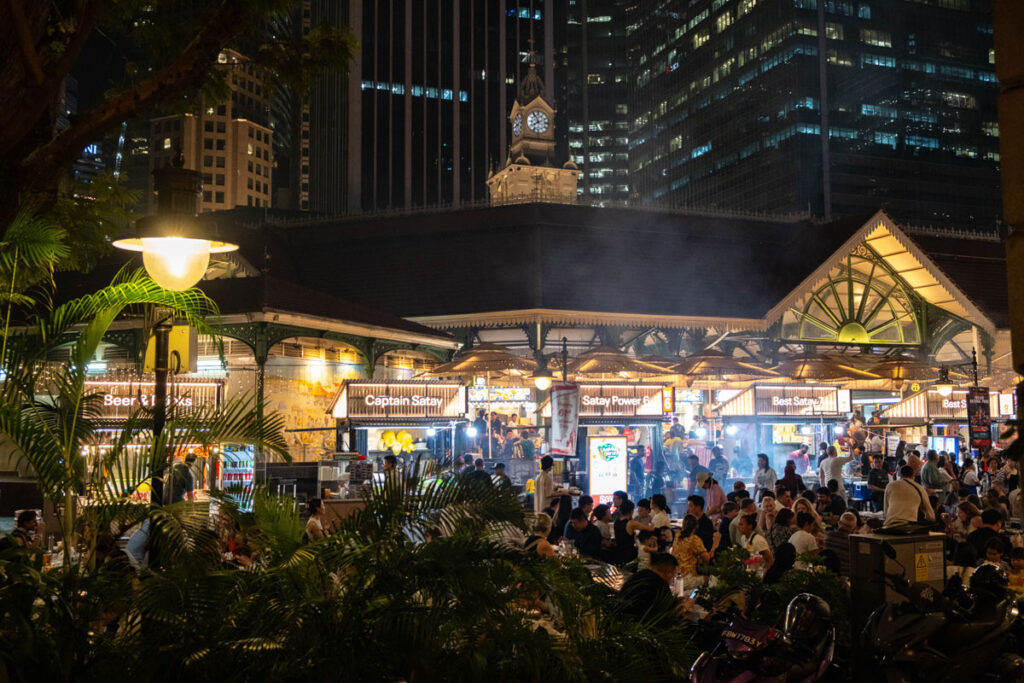
Grilled meat skewers with a peanut sauce for dipping – what’s not to love. Chicken, beef, or mutton get marinated, skewered, and cooked over charcoal until the edges char just enough. The peanut sauce is the star, though: thick and a little sweet, a little spicy, and very moreish. Add the classic sides of compressed rice cakes, cucumber, and onion, and you’ve got the perfect street food snack that requires zero cutlery and zero shame about ordering ten more.
Head to the Satay Alley at La Pau Sat for the best atmosphere and don’t forget a cold beer to wash it all down.
Hokkien Mee

Not to be confused with the many other dishes across Southeast Asia also called Hokkien Mee, because apparently one name for wildly different noodle dishes was too straightforward. The Singapore version is a stir-fry of yellow noodles and rice vermicelli with prawns, squid, and pork, all bound together in a stock that’s reduced until it clings to every strand. A squeeze of lime and a spoon of sambal on the side, and I’m not sure you need any other noodle dish in your life.
Char Kway Teow
Char Kway Teow is the perfect late-night food. Flat rice noodles get tossed in a hot wok with dark soy sauce, Chinese sausage, prawns, cockles, and bean sprouts, all finished off with a good dose of wok hei, that slightly smoky char you only get from serious wok skills and serious heat. It’s rich, a little greasy in the best way, and exactly the kind of dish you order and then immediately regret not ordering a second plate after a night out.
Nasi Lemak

Nasi Lemak is another breakfast staple though I have seen it served any time during the day. Coconut rice cooked in coconut milk and pandan leaves is the base, but the magic is in the toppings. Traditionally, Nasi Lemak comes with an egg (fried or boiled), roasted peanuts, crispy anchovies (!!), cucumber, and a spoon of sambal in various degrees of spiciness.
In addition, it is usually served with chicken, alternatively beef rendang, or even something fishy. I like it from Ayam Taliwang at Lau Pa Sat, where they have different protein options.
Like many other Singaporean foods, Nasi Lemak is technically a Malaysian dish, but Singaporeans love it just as much. In fact, if you fly anywhere in Southeast Asia with a local carrier, chances are you will find it on the menu. Why anyone would think anchovies and eggs are great for an in-flight meal, I do not know, but I will still order it every time.
Singapore Sling

Not a food, I know, but it earns its spot on any Singapore list. It was invented at the Raffles Hotel as a drink for women who weren’t supposed to drink alcohol in public back in the day. Thus, it looks like a colorful juice concoction when, in fact, it is gin-based. I will admit, I don’t like overly sweet cocktails and the price is eye-watering, but if you don’t mind a hefty price tag, peanut shells on the floor, and a rather long wait, there is probably no cocktail more iconic than a Singapore Sling at the Raffles.
Where to Foodies should stay in Singapore

QT Singpore
Many hotels in Singapore offer some great in-house dining options or are even home to Michelin-starred restaurants. One of my new favorites is QT Singapore. The only Southeast Asian house of the beloved Australian group offers impressive culinary options for 2-legged and 4-legged guests alike.

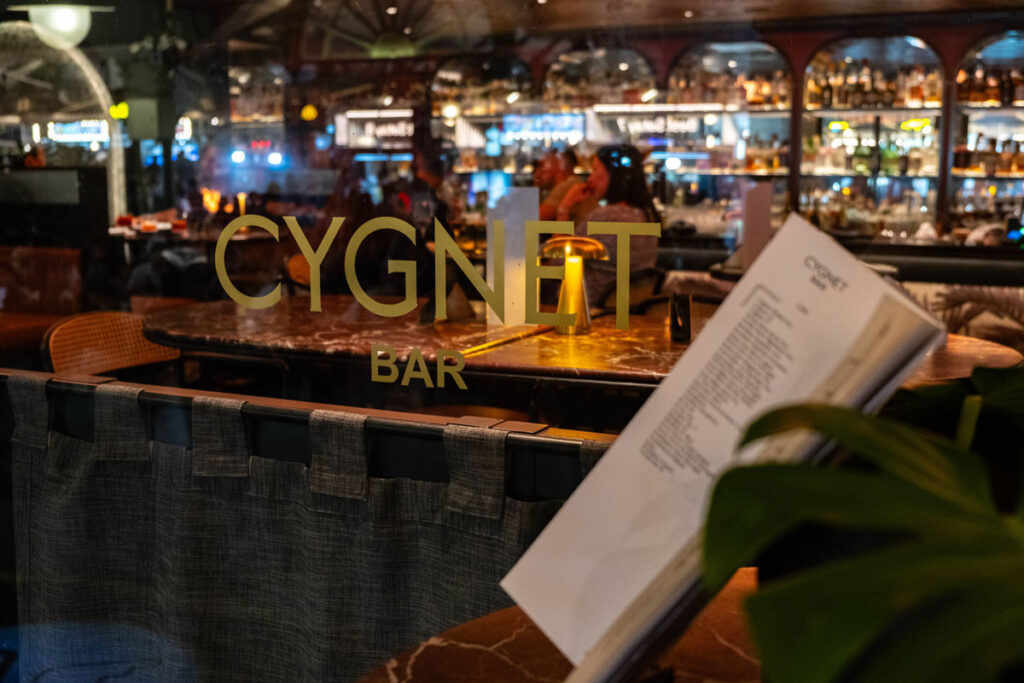
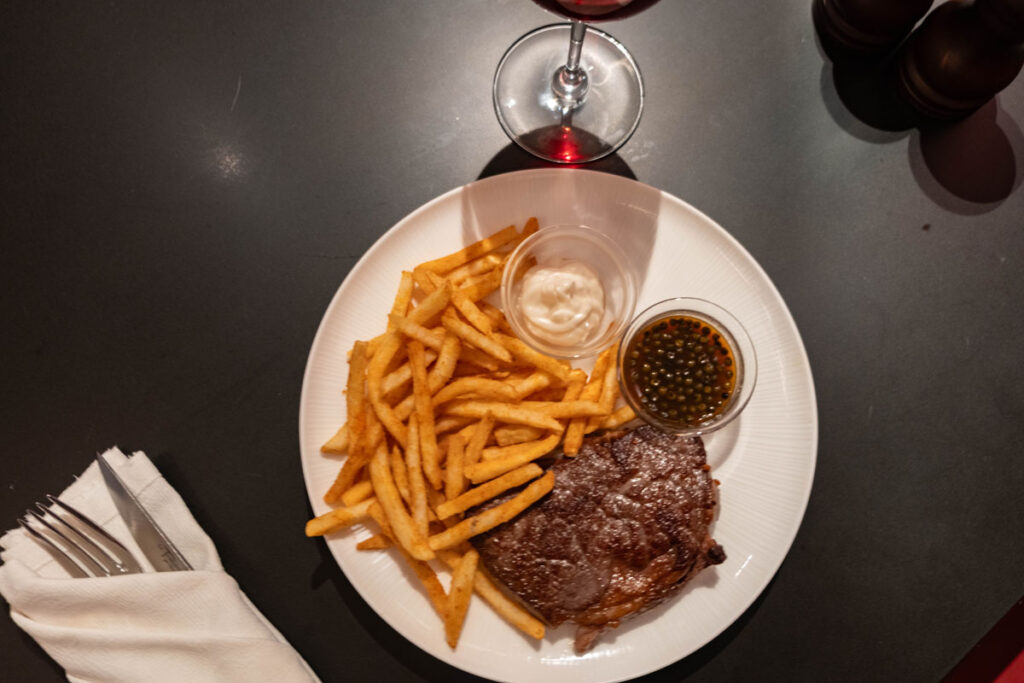
Since I don’t travel with a dog, I focused on the food for humans, including the wonderful DIY cocktail kits in your room, a rooftop bar and restaurant, and their signature restaurant and bar, Cygnet. Cygnet is frequented by in-house guests and Singaporeans alike for its free-flow steak frites and bistro classics with an Australian twist. And they have an amazing happy hour, perfect if you want a Singapore Sling or two without crying.
Another big culinary plus of QT: the hotel is located less than a minute’s walk from the Lau Pa Sat hawker center. My favorite is to pick up a Nasi Lemak from there and eat it in bed after.
Ann Siang House


Ann Siang House, short ASH, is a boutique hotel in Singapore. It sits on Ann Siang Hill in Chinatown, a corner with hip bars and restaurants, yet within walking distance of hawker centers and the famous Smith Street. The building itself is a restored shophouse from the 1920s, so you will soak up a piece of Singapore history simply in your sleep.
While the lobby and the dining corner where breakfast is served are small and clad in dark blue, the rooms are quite spacious and light. That even goes for the deluxe rooms, which are the lowest room category! The decor is retro, with lots of brass, art pieces, and railroad tiles in the bathrooms, while the beds are big and comfortable.
They have various restaurants connected to ASH, and on the top, you will find a rooftop bar with an impressive cocktail menu. However, my favorite feature of Ann Siang House was the free laundry service and the unlimited filtered water tap, which also had sparkling water. I think I must have drunk the room’s rate in water alone.
KINN Habitat
Don’t have money for a hotel in Singapore? I hear you. Luckily, Singapore has some excellent hostels and capsule hotels similar to Japan. I have stayed in two different KINN hostels that were modern, clean, and very comfortable and within walking distance from some great foodie areas in Singapore.


Their dorm rooms are nice and well-appointed, and they offer enough privacy that I wouldn’t mind spending a few nights there. You can choose between female- or male-only rooms, but they also have coed dorms and some private rooms.
Pin for later!


2 comments
It looks so delicious. Your photos make me hungry now. I will travel to Singapore next month. This blog helps me a lots. Thank you so much.
Thanks for reading! Sorry, but I had to remove your link – it is a bit spammy to leave a link in a comment like this 😉