
Disclosure: This trip was supported by Finnair & Japan Tourism.
This post contains affiliate links. If you book something through these links I get a small commission at no extra cost to you. You can read more about my disclosure and affiliate policy here.
…
The amount of research I did about things to know before visiting Japan was extensive. Even for me, already an innante planner, sometimes to a fault. While I have traveled extensively in Asia including big cities like Bangkok, Kuala Lumpur, Ho Chi Minh City, and New Delhi, Japan travel intimidated me.
Things seemed to run a little differently there so I read blogs, watched reels, and finally started an actual Excel sheet. After all, it was my first time visiting Japan and I wanted to be prepared and make the most of it – not only because Japan is definitely a pricey destination.
Now I am back and while a lot of things were so much easier than anticipated, there were definitely some things to know before visiting Japan that I wish I had known. For those planning their first trip to Japan I thought I would pass on my hindsight wisdom…
Things to know before traveling to Japan – My personal tips

Table of contents:
Tips for visiting Japan – how to get there

Japan has several international airports. I flew with Finnair to Tokyo Haneda and left from Osaka Kansai. Finnair has direct flights from Helsinki to both Tokyo Haneda (7 times a week) and Tokyo Narita (6 times a week), Osaka Kansai (5 times a week) and Nagoya (twice a week).
If you are planning to travel around it might be less expensive to book different airports for your arrival and departure like I did. It won’t increase your flight price but will save you a trip domestically.
Make sure to know which airport you are traveling to/ from. For my return flight, I first went to Itami Airport. While called Osaka International Airport, Itami mainly handles domestic flights. Yes, I was at the wrong airport and had to pay for a very expensive taxi to get to Osaka Kansai in time for my flight. Hopefully, this won’t happen to you but yes, check your airports!
Finnair offers three different booking classes on their international flights: Economy, Premium Economy and Business Class.
How to get from the airport to the city? This will of course depend on the city but also your budget. Taxis are always expensive in Japan and traffic is often congested. Chances are you are better off taking the metro or Metrorail. From Tokyo Narita you can take the Narita Express, N’EX, to the city center. And in some cities, there are also airport buses that stop at many big hotels.
I recommend you ask your hotel which train/ metro station is the closest. Once you arrive at the airport you can use Google Maps to find the fastest connection by public transport. An exception is a late-night arrival as most trains don’t run after midnight.
Japan travel tips – Arrival, visa, vaccines, etc.
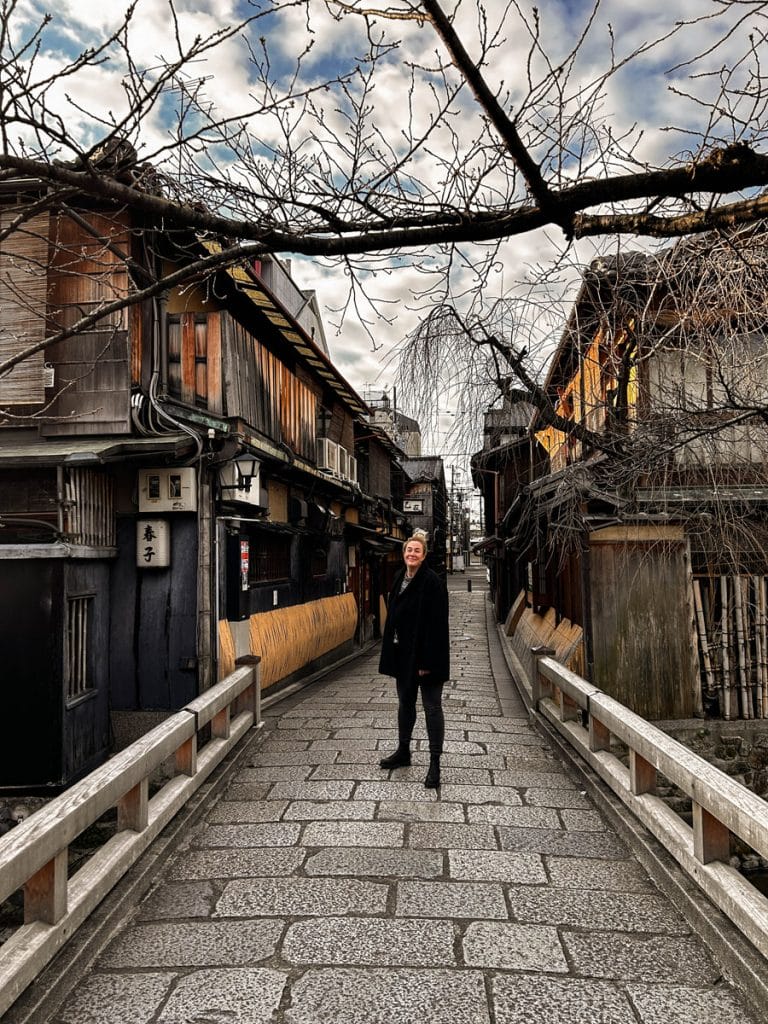
The good news is that over 60 nationalities can enter Japan as a tourist visa-free for up to 90 days. This includes US citizens, Canadians, and Germans. An eVisa is expected to be launched soon for those who need a visa to visit Japan.
There are no mandatory vaccines needed if you want to come to Japan either. You are however required to carry your passport with you at all times as a visitor. Apparently, you can get fined if you get caught without. That said, I carried my passport with me, nervously so, for the first week and left it at my hotel after. I do have a picture of it on my phone but felt the risk of losing it outweighed the risk of getting caught without it. Up to you of course!
Tips for Japan – All things money
Surprisingly Japan is still largely a cash society. Obviously, you can pay for your room by credit card in larger Hotels and your fancy Omakase meal as well but for many daily things, you will need cash. As in Japanese Yen.
I have not exchanged money before or during a trip in years. For Japan, I actually took 100 euros to exchange at the airport just in case. However, it was much easier to just draw money from an ATM (and no line unlike the exchange counter). True, not all Japanese ATMs will accept foreign cards but that is where good old 7-Eleven comes to the rescue. They have their own brand of ATMs working with foreign cards that are not just in their stores but also in stations and at the airport. Family Mart also has some and there are other ATMs too – honestly, you won’t have any issue drawing cash unless you end up in a tiny mountain village.
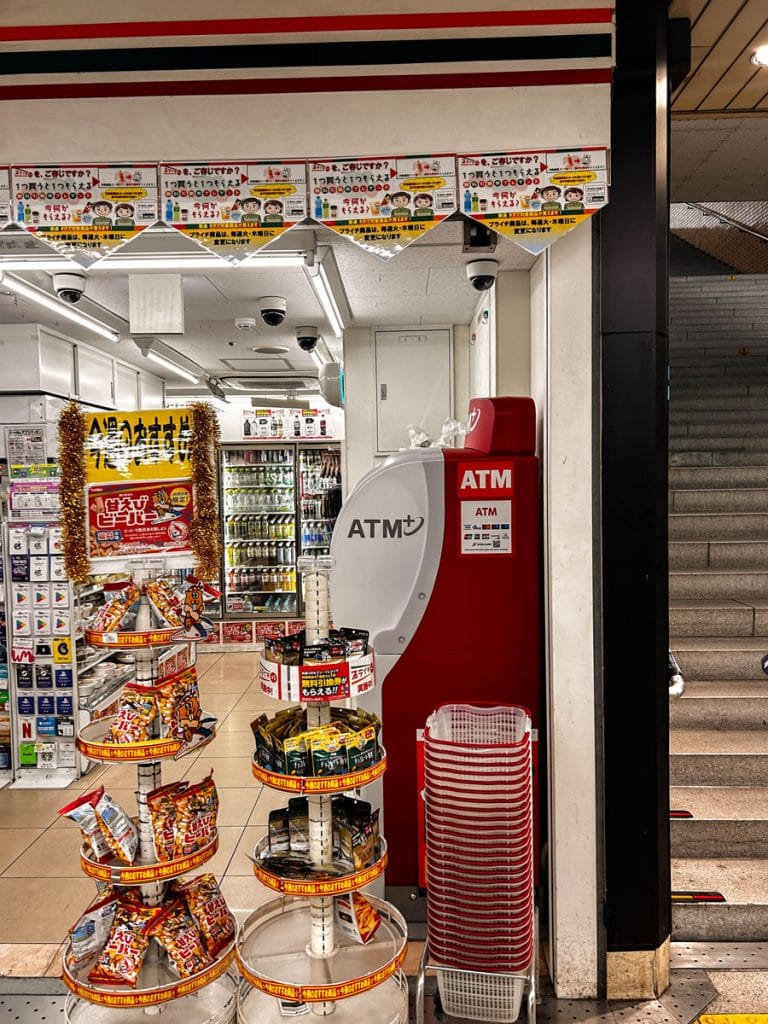
When you draw money you will get crisp 10,000 yen bills. Often cash payments are done via a machine and paying with bigger bills is no problem – you will even get your change in bills.
IC Card
The IC card (Integrated Circuit Card) is a popular form of payment in Japan and you should definitely get one to make your life easier. There are a few different ones but the most famous ones are the Pasmo or Suica card. They are basically prepaid cards that you load up with money.


Once you arrive at the airport I recommend you get an IC card immediately. They have special ones for tourists that are valid for 28 days – you can get them at a dedicated machine or a service counter. Honestly, if you are lost just chat to the information desk – the people are so helpful and will show you where you need to go. And yes, they speak English!
When you have your card you can top it up at machines in all the train and metro stations or at 7-Eleven. You can use it to pay for your subway rides (more on that below) and at some convenience stores.
If you prefer not to carry yet another thing around, you can also get a digital version for your phone. Just download Suica or Pasmo from the app store, put it in your Apple Wallet (or the Android equivalent), and charge.
First-time Japan travel tips – How to get around

One of the things to know before visiting Japan is where you want to go and how to get there. Japanese bullet trains called Shinkansen are world-renowned and a great and fast way to get around. In fact, I am working on a whole article about Japanese train travel.
If you are traveling to Japan for the first time, the famous Japan Railpass is an easy way to use most trains for 7, 14, or 21 days. But it is also quite expensive. They recently raised their prices and unless you plan on using it a lot, it might make more sense to buy individual tickets. Once you have put together your Japan itinerary, I recommend checking here how much each ticket would be, adding up the cost, and comparing it to the Railpass prices.


Another option might be flying as there are many inexpensive domestic flights available in Japan these days.
If you do get a Railpass you will need to buy it before your trip and exchange the voucher once you arrive. To exchange it you will need to show your visitor’s stamp in your passport as non-visitors cannot use the Railpass.
Getting around Japanese cities

Comfy shoes and your IC Card will become your best friend in most Japanese cities. I will freely admit, I usually love Grab & Co but in Japan taxis and taxi apps are just too expensive for my liking. And really, in most cases, you won’t need them as the public transport is excellent.
Each city in Japan has its own fleet of metros, local trams, and JR trains for shorter distances. To be honest, it can be a bit tricky to figure out what is what. I recommend you use Google Maps to get around. The app will show you the different connections, where you need to change, and how much the trip will be. It will also show you how to get from the station to your final location. It even shows you which exit to take, a lifesaver in Japan’s often huge stations, as well as the platform a train is leaving from.

While it didn’t work 100% it worked pretty well and I only got lost a couple of times. Mind you, that was usually my own fault. A great thing about Japanese subways: they have displays that show you which side the door will opens, which car you are in, and where the respective exits are.


Different lines require different tickets. You can get an individual ticket at any machine however I strongly recommend you use your IC card. While there are daily passes available those usually belong to specific train networks. Unless you know exactly which ones you will be using, it seems a tricky endeavor to get your money’s worth. The IC cards on the other hand work for all trains. You simply tap it at the gate when you enter and tap again when you exit. On some trams, you tap the counter in the car. When you leave you will also see the amount deducted and how much you have left. Fear not, if you go into minus there are so-called ‘fare adjustment machines’ inside where you can top up your card before you leave the station.


There are also some women’s only compartments. Though to be honest, I felt there was never a place where this was less needed but to each their own.
And of course, they also work for the buses!
Obviously, there might come a time when a taxi is needed. My hotel in Kyoto ended up being rather far from the station so I used Uber to get around on occasion. Uber works just like it would in any other city. Taxis are pretty straightforward as well. The only difference: a red sign shows a vacant taxi and a green sign means it is occupied.
Drivers will always open and close the doors electronically for you. While some taxis accept credit cards and even IC cards, not all do. Check beforehand if you don’t have enough cash on you.
If you use a regular taxi it might make sense to have your address written in Japanese. Alternatively, I showed my drivers where I needed to go on Google Maps which always worked out well.
Wifi & Internet

Wifi is pretty much everywhere available and pretty good. This goes for a lot of public spaces and trains as well as hotels, museums, and restaurants – especially when they have a QR code with the menu.
That said, I never wanted to be without especially for my translation app and Google Maps so I got myself a Japanese SIM card before. While they do exist, getting a tourist SIM at the airport doesn’t seem to be a big thing in Japan. Most people recommend to get your SIM card beforehand. You can either have it sent to your home address (I had enough time so this is what I did) or order it, pay it, and pick it up at the airport once you arrive.
Alternatively, you can also rent a pocket wifi which you pick up upon arrival and return when you leave.
I was told my SIM card has a fair usage policy with a maximum of 2GB per day and was advised to get pocket wifi if I wanted to use more. Honestly, as far as I know, I never hit my quota and was online the whole time. To me, a pocket wifi seems more hassle since you need to return it after your trip and have to take care of yet another device.
A good alternative is an eSIM for Japan if you don’t want to switch out your regular SIM card.
Japan for first timers – Activities & Tours

If you are coming to Japan for the first time, chances are you will want to see all the sights and book a few tours as well. One of the things to know before traveling to Japan – stuff books out quickly! While I know that some travelers love to be spontaneous you should book time slots for the activities and sights you want to see well in advance.
Depending on the activity, bookings usually open a couple of months in advance and I urge you not to wait too long. This includes things like TeamLab Borderless, Shibuya Sky, and most famous museums and amusement parks like Disneyland in Tokyo or Universal Studios in Osaka.
I made my bookings only 10 days prior and to be honest, it was slim pickings. If you want a particular time slot like sunset at Shibuya Sky you have to be quick. And if you want to visit a Tokyo museum on a rainy day, chances are you can’t unless you have predicted the weather and have your ticket already.

You can buy most tickets for Japan activities and tours either on Klook or directly on the designated website.
When it comes to things like food tours or walking tours, you won’t have to book as far in advance as there are usually more options (unless of course you are set on one specific tour). I booked a Kyoto walking tour for the evening only a few hours prior without any issues. That said, if you are short on time and are set on a specific tour rather book it in advance so you won’t miss out.
This also goes for a lot of restaurants by the way. If you don’t want to miss out, book beforehand.
Japan tips for first timers – All about hotels

Japanese hotel rooms are notoriously expensive and tiny. What can I say? Property is expensive in Japan. To be honest, when I searched for ‘the best hotels in Osaka, Kyoto, Tokyo…’ I got irritated with the number of blog posts claiming a room for just $ XYZ only to find that the price had doubled or more. And I wasn’t even traveling in any sort of high season. So I got to work, doing my own research.
I paid as little as $ 36 per night at the R Hotel Namba South in Osaka (which I can highly recommend!) and up to $ 250 at Kokuya Ryokan in Shibu Onsen. The latter was a special birthday treat though and also came with dinner. On average I spend $ 130 per night which is definitely a lot more than I would usually spend. However, I chose well and my rooms became a wonderful refuge at the end of a long day.
Read more:
Staying at a traditional ryokan in Shibu Onsen
Here are some things to consider when getting a hotel room:
Check the room size. As I said before, Japanese hotel rooms are tiny. While there are still many single rooms in Japan I often upgraded to a double room only to have more space to open at least my suitcase. If you are traveling as a couple I think you may need to alternate opening your luggage or go for an even bigger room. At the R Hotel Namba South, I wasn’t able to open the door with my suitcase open, and in all the other hotels, it was always somewhat in the way.


Don’t overpack. That said, take a smaller luggage. Japanese hotels provide everything for you including PJs and slippers, razor, toothbrush, and more. The only thing they don’t seem to have is body lotion so do take your own.
Drinking water. You can drink tap water so most rooms only have a kettle and mini fridge but no bottled water. Take your own bottle and refill as you go.
Check-in times. The check-in and check-out times were horrible. A 3 pm check-in time seemed to be quite normal while a 10 am check-out time was also not unusual. Meh. Most hotels will store your luggage though.
Capsule hotels. I did not sleep in a Capsule hotel as I wasn’t sure about the luggage storage situation and since I am not a hostel fan in general it didn’t seem like a great option for me. If you don’t mind that, I think they are a great and affordable solution when looking for a bed in Japan. They usually have separate women’s and men’s floors though which might not be ideal if you are traveling with your partner.
Booking. I booked most of my hotels via booking.com as per usual but was pleasantly surprised to find one of my favorite hotels, the Zentis Osaka, for much cheaper on Agoda. To be honest, I never compare prices between those platforms but in this case, I saved $40 per night. If you are set on a hotel it can pay off to shop around.
Payment. I paid most of my hotels upfront through the booking site which was great as I didn’t have to max out my credit card while in Japan. All taxes and fees were included in the prices except for a city/tourist tax I had to pay at some places during check-in. In Kyoto, it was 200 yen per night but usually, this tax will depend on your room rate and is charged per person per night.
Staying at a ryokan. I will tell you all about my stay at a traditional Japanese inn, a ryokan, but something to note: not all will accept single travelers. Since you usually book your stay with meals and such they are treated more as an experience than a mere room. Some can also only be booked through an English agent; it will usually tell you on their website. Others like the one I stayed at you can simply find on Booking.
Japanese toilet etiquette


One of the things to know before visiting Japan is the toilets. Japanese toilets are legendary. And they are as good as you think they are. During my entire 2,5 week trip, I only sat on a cold toilet once. That was in a regional train and thus excused. All other toilets greeted me with a warm seat, various options for flushing (flush and little flush), automatic bum-gunning, and sometimes even white noise. The latter is more for your neighbors when in a public toilet but some sounds can also be quite ‘inspiring’ if you know what I mean…
If there is any country where I would not hesitate to use a public toilet it is Japan. Even the train toilets were a delight.
Keep in mind that you are explicitly asked to flush your toilet paper in Japan (unlike in most other Asian countries). In some homes or hotels, you will get room slippers and change into specific toilet slippers that stay in or in front of the toilet.
There are also some squatting toilets in Japan, which are considered traditional Japanese toilets, however, I never came across any during my trip.
Also, all public toilets are free in Japan.
What not to do in Japan

Japanese people are polite and considerate to a fault. They love to queue and with exceptions, it is very quiet in Japanese cities as nobody honks while driving or speaks on the phone in public.
So here is the first thing on what not to do in Japan – don’t talk on your phone in public and obviously use headphones when listening to music or playing games. In fact, there are even signs on the subway asking you to turn down the volume while wearing headphones lest any escaping noise could bother someone.
Whether you are taking the metro or a Shinkansen you don’t just rush in once the door opens. You will see Japanese people queuing orderly on the platform, leaving enough space for people to get out first. On most train stations you will even see lines on the floor showing you to queue for train no 1 and a separate one for train 2.


You will also see lines forming to get on the escalator or an elevator. Escalators are sometimes slim enough to fit one person but can usually accommodate two people next to each other. One side is for standing while the other side is for walking. Which is which will depend on the city, believe it or not. In Tokyo, you stand on the left, in Osaka on the right, and Kyoto seemed to be a wild mix depending on the escalator.
When you greet someone you give a little bow (yes, this goes for deer as well!). Unlike many other Asian countries, you don’t put your hands together while greeting. This to me was tricky to get used to. But I like to think that nobody minded as it seemed polite enough with or without hands.

As someone who often gets complimented on her fragrance, I was very mindful while using it in Japan. Heavy colognes and perfumes are just not something you do in Japan. This is something to keep in mind in public spaces and especially in restaurants. Many restaurants even have a note on their booking system to not wear any fragrance lest you mess with the subtle aromas of your meal.
While there are still many hotel rooms and even restaurants you can smoke, smoking on the street is prohibited in many places. Instead you will see smoking corners or rooms.
The probably most famous rule of what not to do is the no-tipping rule in Japan. While I am not American sometimes this was hard because there were many moments when I genuinely wanted to show my appreciation for a great meal or service. Some restaurants these days will add a service charge (usually higher-end places) and I did see the occasional tip jar. However, in most places, it is just not a thing.
That said, I did get my guide at the Snow Monkey Park a beer at the end of our tour and in other places, I made sure to leave a good review to show my appreciation and gratitude.
What to know before visiting Japan – the Japanese language


The language barrier was one of the things I was most nervous about. After all, the movie is not called “Lost in Translation” for nothing. Or so I thought. But honestly, I shouldn’t have worried. In big cities and places with lots of tourists, you will always find someone who speaks English. Trains and machines have signs and announcements in various languages. Yes, even the regional trains will announce stops in Japanese and English, and most metro stations have the names in both languages as well as a station number.
For those rare cases when nobody speaks English people are just so kind they will still try their best to help you. That said, I got the Naver Papago app to translate. This was great when I had to ask for fresh wasabi in the grocery store or other more complicated things. You can also take pictures with the app and it will translate for you which really came in handy. While Google Translate offers the same option I heard that Papago was better for Japanese.
In addition, you should definitely memorize some Japanese words and phrases. Honestly, it is not as hard as you may think at least not where pronounciation is concerned.
Thank you very much – arigatō gozaimasu (the u is silent)
- Hello – Kon’nichiwa
- Good morning – Ohayō gozaimasu
- Yummy – Oishī
- Bye bye – Baibai
- Excuse me – Sumimasen
- And my favorite – gochisosama – a thank you to the chef after a meal!
I also learned that sayonara is only used as a final goodbye. If you are planning on never seeing someone again and are thus very formal and well, final, it is the right word to use.
Many restaurants these days will have an English menu, and no, that does not mean it is a tourist trap. Otherwise you will need to try to use the app and chances are when your app says ‘whale’ it does mean whale.
Final random thoughts of things to know before traveling to Japan: bring various comfy shoes you can switch out. Honestly, I have not walked as much in a long time and I know this seems to be a standard in Japan. Make sure to bring sturdy but also comfy shoes so you can switch according to the weather and how much your feet hurt.


And take a little plastic bag for trash. Japan notoriously does not have any public trash cans and many restaurants will only let you discard their own wrappings and trash. I carried empty Starbucks cups in my bag a few times and once there was an eel skewer in my coat pocket for a whole day. Eeeew. Take a plastic bag that you can empty into your hotel bin at the end of each day.

